
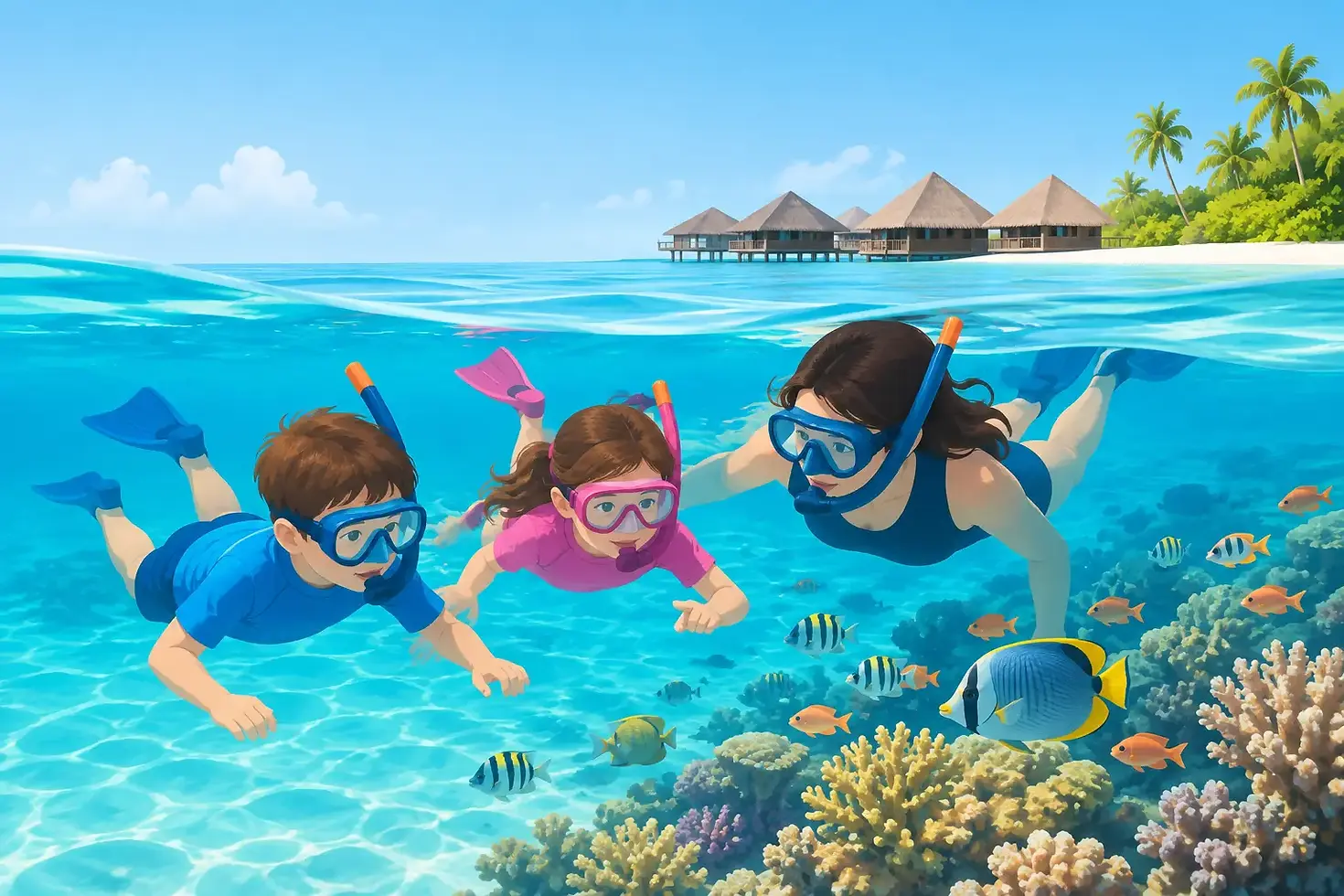
Can Children Join Snorkeling in the Maldives?
A child’s first look through a snorkel mask can be a holiday-defining moment: bright parrotfish slipping over coral, a turtle moving calmly through blue water, and the proud shout of “I saw it!” back on the boat. But can children join snorkeling in the Maldives? Usually, yes - when the experience matches their swimming confidence, comfort in the sea, and the conditions on the day.
For families visiting Rasdhoo, snorkeling can be far more than a quick activity between beach hours. The atoll’s clear lagoons and nearby reefs offer real wildlife encounters, but the best family days are planned around calm water, patient guidance, well-fitted equipment, and no pressure to go farther than a child wants to go.
Can children join snorkeling safely?
There is no single minimum age that works for every child. Some confident six-year-olds are happy floating in a calm, shallow lagoon with an adult beside them, while an older child may need more time to get used to putting their face in the water. Swimming ability matters, but it is not the only factor. A child also needs to listen to instructions, stay close to their supervising adult, and feel comfortable wearing a mask and flotation device.
For younger children or hesitant swimmers, the goal does not have to be traditional snorkeling. A full-face viewing mask, a child-sized mask while holding an adult’s hand, or simply looking into the water from a boat can still make the reef feel magical. The experience should build confidence, not test it.
Parents should also distinguish between beach snorkeling and a boat excursion. A sheltered beach entry can be a gentle introduction, with the option to return to shore at any time. A reef reached by speedboat may offer more colorful coral and larger marine life, but it also involves boat travel, currents, deeper water, and a longer commitment. Neither is automatically better. The right choice depends on the child and the sea conditions that morning.
What makes a family snorkeling trip a good fit
A family-friendly snorkeling outing begins well before anyone enters the water. Tell the team arranging your trip your children’s ages, swimming level, and whether they have snorkeled before. This allows the route, reef stop, timing, and equipment to be chosen with your family in mind rather than treating every guest the same.
The best conditions are usually calm water, good visibility, and a site with a protected area where adults and children can enter gradually. In the Maldives, weather, wind, tide, and currents can change the character of a snorkeling spot. A reef that is perfect for experienced adults may not be suitable for a young first-timer on a windy afternoon. A responsible operator will change the plan, choose another site, or advise against entering the water when conditions are not right.
Close supervision is non-negotiable. Each child should be within immediate reach of a responsible adult in the water, even if they are a strong swimmer. A guide can point out marine life and explain the reef, but parents or guardians remain central to their child’s safety and reassurance.
Gear is not a small detail
A leaking mask or oversized fins can turn an exciting morning into a frustrating one. Children need masks that seal comfortably around the face, snorkels they can use without strain, and fins that stay on without rubbing. It is worth testing the mask in shallow water first, rather than discovering a problem after reaching the reef.
A properly fitted life jacket or buoyancy vest is strongly recommended for children, including capable swimmers. It conserves energy, keeps the child comfortably on the surface, and gives parents greater peace of mind. A rash guard adds sun protection and can prevent scrapes from accidental contact with boat ladders or sand.
Avoid relying on inflatable pool toys as safety equipment. They can shift, deflate, or encourage children to drift away from the adult supervising them. Use equipment designed for open-water snorkeling instead.
Start with a beach practice session
Before booking a longer excursion, give children a simple practice session in shallow, calm water. Let them stand where they can comfortably touch the bottom. They can first put their face in the water without a snorkel, then practice breathing slowly through it while holding onto an adult or flotation device.
Teach three simple habits: stay beside your adult, keep your hands away from coral, and signal right away if something feels uncomfortable. Children do not need a complicated marine safety lecture. Clear, repeatable instructions work better, especially when excitement is high.
It also helps to explain what they may see. Fish are fascinating, but they are wild animals in their home. A turtle may swim past and a reef shark may appear in the distance. Reef sharks commonly seen around Maldivian reefs are generally shy, but children should understand that the right response is always calm observation, never chasing, touching, feeding, or blocking an animal’s path.
If a child dislikes the mask, gets anxious about waves, or simply says they are done, listen. Forcing one more attempt can make them associate snorkeling with stress. A short, happy first session is far more valuable than a long one they endure.
Choosing the right Rasdhoo experience for children
Rasdhoo Atoll is known for marine encounters that can sound thrilling on a family wish list: turtles, eagle rays, reef sharks, coral gardens, and seasonal manta excursions. Yet the most famous wildlife trip is not always the right first snorkel for a child. Conditions, boat time, water depth, and the child’s confidence should come before a particular animal sighting.
Families often do well by starting with a calm lagoon or an easy reef visit, then deciding whether everyone is ready for more. Once children are relaxed in the water, a guided trip can become a wonderful shared adventure rather than a logistical challenge. Early departures may also be more comfortable, with softer sun and fresher energy before the heat of the day.
At Ras Rana Lodge, families can ask for help arranging snorkeling that suits their comfort level, from an easy introduction near the beach to a planned marine excursion. Being based close to the bikini beach makes it easier to keep the schedule flexible. If a child needs a rest, snack, or change of clothes, your room is not far away.
Bring drinking water, reef-safe sun protection, towels, and a dry bag for essentials. Apply sunscreen well before entering the water and reapply as needed. Children can become chilled after a long float even in warm weather, so a dry cover-up for the boat ride back is useful. If your child is prone to motion sickness, speak with a medical professional before travel about suitable options for their age.
When children should skip the water
There are times when the best decision is to enjoy the ocean from the boat or beach instead. Skip snorkeling if a child is unwell, overly tired, frightened, unable to follow safety directions, or struggling with their equipment. Do the same if the sea is choppy, currents are stronger than expected, or visibility is poor.
This is not a missed holiday. Watch for dolphins from the boat, look for tiny fish along the shoreline, build a sandcastle, or return another day. The Maldives rewards unhurried travel, and children often remember the feeling of being cared for as much as the animal they hoped to see.
Questions parents often ask
Do children need to be strong swimmers?
Not necessarily for a very calm, closely supervised introduction with a flotation device. However, children should be comfortable in water, willing to keep their face near or in the sea, and able to follow directions. Children who cannot swim should only take part in an appropriately controlled setting with one-to-one adult attention.
Can children see sharks while snorkeling?
They may. Rasdhoo’s reefs can be home to reef sharks, along with turtles and schools of tropical fish. Sightings are never guaranteed, and guides should choose conditions appropriate to the group. Children should observe quietly from a respectful distance.
How long should a child’s first snorkel be?
Ten to 20 enjoyable minutes may be plenty. Build time gradually. End while your child is still smiling and curious, rather than waiting until they are cold, tired, or overwhelmed.
A great family snorkeling day is not measured by how far you swim or how many animals you spot. It is the moment your child feels safe enough to look down, sees a living reef for the first time, and asks when they can go back.



Comments