

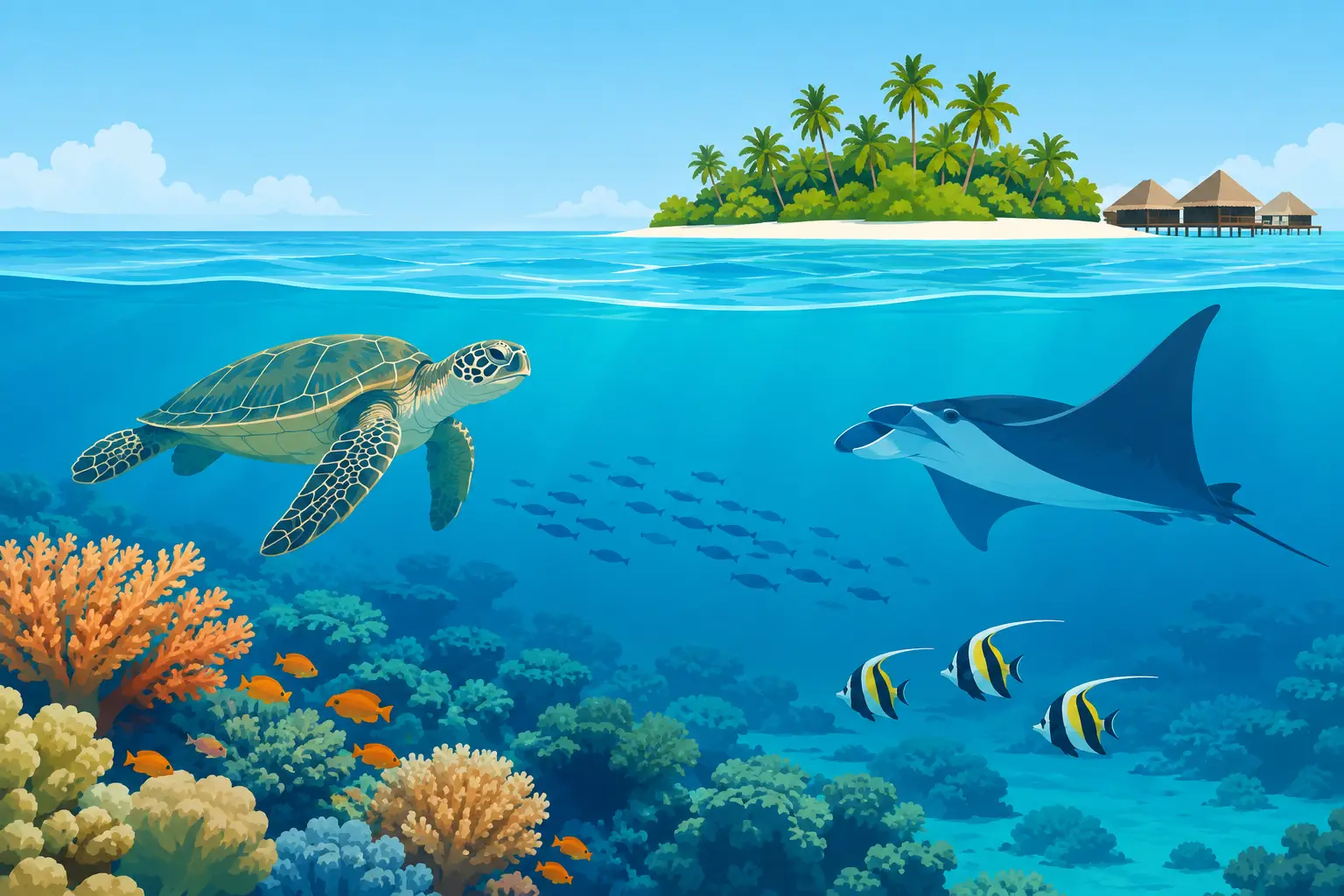
Maldives Marine Wildlife: What You Can See
A blacktip reef shark slips over pale sand in water clear enough to see from the surface. A turtle pauses at a coral head, unhurried by the swimmers nearby. Then, on the right morning and at the right dive site, a hammerhead shark appears in the blue. Maldives marine wildlife is not limited to one famous encounter - it is the reason many travelers plan their entire island stay around the water.
For guests staying on Rasdhoo Island, the experience can feel especially close. Bikini beach is a short walk away, while many celebrated reefs and dive sites are reached by speedboat in roughly 5 to 20 minutes. That means more time in the lagoon, on the reef, or beneath the waves - and less time commuting from a distant resort.
Maldives Marine Wildlife Around Rasdhoo
The Maldives is made up of coral atolls, and each reef has its own character. Some are best for colorful shallow-water snorkeling. Others have channels, pinnacles, stronger currents, and deeper blue water that attract larger marine life. Rasdhoo Atoll is particularly well known among divers for its variety, from approachable reef residents to thrilling pelagic sightings.
No wildlife encounter can be promised. Sea conditions, currents, season, tide, visibility, and simple luck all matter. But that uncertainty is part of what makes a sighting so memorable: the ocean is alive on its own terms, not a scheduled attraction.
Reef sharks: calm, graceful, and often misunderstood
Blacktip reef sharks and whitetip reef sharks are among the animals guests most hope to see. They may cruise over sandy areas, rest near reef ledges, or pass along the edge of a coral garden. For many first-time snorkelers, seeing a shark can bring a rush of nerves followed quickly by awe.
These reef sharks are generally shy around people and are a normal, valuable part of a healthy reef ecosystem. Give them space, stay calm, and watch their smooth movements from a respectful distance. Chasing a shark for a closer photo usually ends the encounter for everyone.
Green turtles and hawksbill turtles
Turtles are a favorite for families, couples, and underwater photographers because they often allow a quiet moment of observation. Green turtles are commonly seen grazing in seagrass areas, while hawksbill turtles may feed around coral reefs, using their narrow beaks to reach into crevices.
A turtle swimming beside you can feel wonderfully personal, but it is still a wild animal. Never touch its shell, block its path to the surface, or crowd it with a group. The best turtle encounters happen when swimmers float gently and let the animal choose where to go.
Manta rays and eagle rays
Manta rays are among the Maldives' great bucket-list sightings. Their wide, wing-like movements look almost effortless as they glide through the water. Depending on the time of year and local plankton conditions, mantas may gather at feeding areas or visit cleaning stations where small fish remove parasites from their skin.
Eagle rays offer a different kind of magic. They are smaller than mantas but beautifully patterned, often seen moving over sandy channels or reef slopes. Whether you see one ray or several, the key is patience. Keep your body low in the water, avoid sudden kicks, and let the animal pass naturally.
Hammerhead sharks in the blue
Rasdhoo is widely recognized for hammerhead shark dives, which are usually better suited to certified divers with suitable experience and comfort in open water. Early starts, deeper profiles, and changing conditions can be part of the experience. This is not the same as relaxed lagoon snorkeling, and that distinction matters when choosing activities.
The reward can be extraordinary. A hammerhead silhouette emerging from the blue water is the kind of sight that stays with divers long after they have dried off. Experienced local dive teams assess conditions carefully and can help guests choose an outing that matches their certification level and confidence.
Snorkeling or Diving: Which Experience Fits?
Snorkeling is the easy choice for travelers who want immediate reef color without extensive training. In shallow, calm water, you may see parrotfish, butterflyfish, blue surgeonfish, reef sharks, small rays, and turtles. It works beautifully for beginners, families, and anyone who wants to combine a beach day with time in the water.
Scuba diving opens a different part of the Maldives. Descending below the surface lets you visit reef walls, channels, overhangs, and deeper cleaning stations. Divers may encounter larger schools of fish, eagle rays, reef sharks, and, with favorable conditions, hammerheads. It also asks more of you: you need the right certification, a comfortable fit with your equipment, and respect for the dive plan.
If you are new to the water, there is no need to force the most advanced trip on day one. A guided snorkeling outing or introductory diving experience can build confidence while still delivering the bright coral and marine life people travel so far to see.
When to Look for Marine Life
The Maldives offers warm water and marine activities throughout the year, but conditions change with the monsoon seasons. Visibility, surface conditions, currents, and plankton levels can all shift from month to month and even day to day. Plankton can reduce visibility in some places, yet it may also bring manta rays and whale sharks looking for food.
Whale shark excursions are especially appealing for travelers hoping to meet the ocean's largest fish. These trips often involve longer journeys from Rasdhoo, so they are best planned as a dedicated adventure rather than a quick morning activity. A sighting is never guaranteed, but the anticipation of scanning the blue water is part of the experience.
For the best fit, tell your host what you most want to see, how confident you are in the water, and whether you prefer an easy snorkel or a more ambitious dive. At Ras Rana Lodge, the team can help arrange excursions, transfers, diving, snorkeling, sandbank time, and dolphin cruises around the pace of your stay.
How to Watch Wildlife Respectfully
The Maldives remains spectacular because its reefs are living systems, not underwater theme parks. Visitors play a real role in protecting them. The simple rule is to leave no trace and allow animals room to behave naturally.
Do not stand on coral, even when water is shallow. Coral can look like rock, but it is made of living animals that are easily damaged by fins or feet. Keep your fins clear of the reef, use reef-safe sun protection where possible, and secure loose items before entering the water.
Wildlife needs distance, too. Do not feed fish, touch rays or turtles, hold onto coral for a photo, or surround an animal with a group. If a guide asks you to stay back, it is not reducing the experience - it is protecting the very encounter you came to have.
A Better Way to Plan Your Wildlife Days
Build variety into your itinerary. Choose one morning for a guided reef snorkel, another for a dive, and leave space for a slower beach afternoon. A sandbank visit can be the perfect reset between more active outings, while a sunset dolphin cruise offers a chance to see another side of island life above the water.
Weather may change a plan, especially on the open ocean, so a flexible schedule is smarter than packing every excursion into the first two days. Ask about conditions when you arrive, prioritize your must-see experience early enough to have a second opportunity, and keep one free day for whatever local conditions make most promising.
The finest marine moments rarely happen when you are rushing. Float quietly above a coral garden, look beyond the obvious, and give the reef time to reveal itself. In the Maldives, the next unforgettable sight may be waiting just below the surface.


Comments