


Can Beginners Try Scuba? A Maldives First Dive
The first time you lower your face below the surface in the Maldives, the view can feel almost unreal: sunlight flickering over coral, schools of bright fish moving as one, and water clear enough to make the reef seem close at hand. So, can beginners try scuba? Yes. For many travelers, a supervised introductory dive is one of the most memorable ways to experience Rasdhoo Atoll, even if they have never worn a mask or breathed from a regulator before.
You do not need to arrive as an athlete, an expert swimmer, or a certified diver. You do need to be comfortable in the water, honest about your health and confidence level, and willing to listen carefully to your instructor. The right first experience is unhurried, personal, and matched to the conditions on the day.
Can Beginners Try Scuba Safely?
A beginner scuba experience is designed to introduce the basics in a controlled setting. Before entering deeper water, an instructor explains the equipment, demonstrates how to breathe through the regulator, and shows you a few simple skills such as clearing water from your mask and signaling that you are okay. You will have time to practice where you can stand or remain very close to the surface before heading out on a guided underwater tour.
Your instructor stays close throughout the dive. That is the difference between trying scuba for the first time and simply putting on equipment in the ocean. A good briefing covers how equalizing pressure in your ears feels, why slow breathing matters, what hand signals mean, and what to do if something feels uncomfortable. Nothing should be rushed.
There is a trade-off worth understanding. An introductory dive gives you a real taste of the underwater world, but it is not the same as earning a scuba certification. You will be guided closely, depth and time are limited, and you cannot independently rent equipment afterward. If the experience leaves you wanting more, it can be a wonderful first step toward a full beginner certification course.
What You Need Before Your First Dive
Most first-time divers need very little prior experience. Being able to swim is helpful, but you do not have to be a powerful lap swimmer. More important is being able to stay calm in water and tell your guide if you are nervous. If you have only snorkeled a few times, that is completely fine. If you have never snorkeled, your instructor can still explain the essentials before you begin.
You will complete a health questionnaire before diving. Certain medical conditions, recent surgery, asthma concerns, heart or lung conditions, pregnancy, or some medications may require a doctor’s approval or mean that scuba is not the right activity for your trip. This is not a formality. Pressure changes underwater affect the body, and a responsible dive center will take the answers seriously.
Flying is another practical detail. Do not plan a scuba dive immediately before a flight. Divers need time at the surface before traveling at altitude, with the recommended interval depending on the number and type of dives completed. Build your diving day into the middle of your Maldives stay rather than saving it for the final morning.
Bring a swimsuit, reef-safe sun protection for time on the boat, a towel, and a dry change of clothes. Equipment such as a mask, fins, wetsuit or rash guard, buoyancy device, regulator, and tank is normally provided for a guided beginner session. Avoid a heavy meal and excess alcohol beforehand, drink water, and arrive with enough time to feel settled rather than hurried.
What a First Scuba Experience in Rasdhoo Feels Like
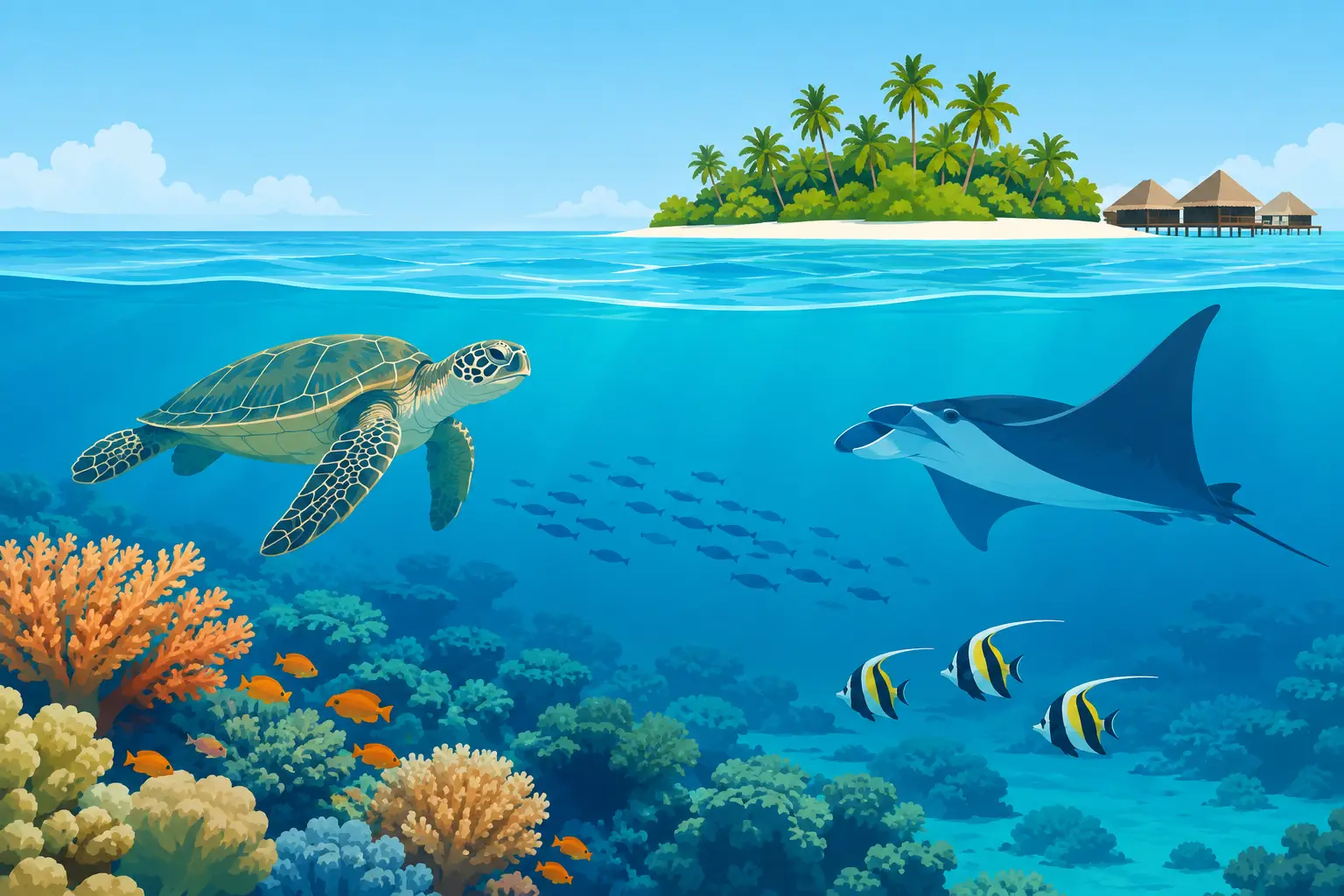
Rasdhoo Atoll is especially exciting because remarkable marine life is close to the island. Some dive sites are reached by a short speedboat ride, and the reef scenery can be rewarding even on an easy, shallow first dive. Coral formations, small reef fish, blue-striped snappers, parrotfish, butterflyfish, and curious turtles are among the encounters that can turn a beginner’s first descent into a lasting travel memory.
Conditions vary by season, weather, currents, and location. The famous open-water sites associated with hammerhead sharks, strong currents, or deeper profiles are generally better suited to experienced, certified divers. That does not make a beginner experience less special. Sheltered reef sites reveal a different kind of beauty: delicate corals, calm fish-filled channels, and the quiet surprise of seeing life carry on beneath the waves.
Your first breath underwater may feel strange for a few seconds. It is normal to notice the sound of your own breathing and to want to look up toward the surface. Give yourself time. Most people relax once they realize they can breathe comfortably and communicate with their instructor using simple hand signals. The goal is not to prove bravery or reach a certain depth. It is to move slowly, look closely, and enjoy the feeling of being a guest in the reef’s world.
How to Know Whether You Are Ready
A beginner scuba session is a good fit if you are curious, reasonably comfortable around water, and open to following instructions one step at a time. Nervousness does not disqualify you. In fact, many confident divers remember being nervous before their first descent. What matters is whether you can pause, breathe, and let your guide know what you need.
It may be wiser to start with snorkeling if you are deeply uncomfortable putting your face in water, panic easily when you cannot stand, or are managing a medical concern that has not been cleared. Snorkeling around Rasdhoo can be spectacular on its own, with warm water, colorful shallows, and the chance to spot turtles and reef sharks from the surface. There is no lesser choice here. The best ocean experience is the one that leaves you feeling safe and happy.
For families, age requirements and suitability depend on the operator, training organization, and the child’s confidence in water. Parents should ask about the exact program, supervision ratio, depth limits, and weather plan rather than assuming every activity is appropriate for every age.
Questions to Ask Before You Book
The quality of your first scuba experience depends heavily on the people guiding it. Ask whether the session includes a pool or shallow-water practice, how many guests are assigned to each instructor, and whether the chosen site is selected for beginner-friendly conditions. It is also reasonable to ask what happens if you decide not to continue after the initial practice.
A professional team welcomes these questions. You should feel supported, never pressured to descend farther than you want to go. The best guides explain that turning back is always allowed. Ocean conditions can change, ears may not equalize comfortably, or you may simply decide that snorkeling is enough for today.
At Ras Rana Lodge, guests can arrange marine experiences with local guidance and easy island logistics, allowing more time for the beach, breakfast, and anticipation before heading out on the water. Staying close to Rasdhoo’s bikini beach also makes it easy to enjoy the sea at your own pace before or after your planned adventure.
Making the Most of Your First Underwater Memory
Try not to spend the entire dive searching for a dramatic animal. A turtle, eagle ray, or reef shark would be an unforgettable bonus, but the smaller details are often what make first-time divers fall in love with scuba: a clownfish protecting its anemone, a blue surgeonfish flashing past coral, or tiny silver fish changing direction in the sunlight.
Breathe slowly, keep your hands relaxed, and resist the urge to touch coral or marine life. Good buoyancy takes practice, so your instructor may guide your position or ask you to stay slightly higher above the reef. That care protects both you and the fragile coral garden below.
Your first scuba dive does not have to be a test. Let it be a new way to meet the Maldives - calmly, safely, and one easy breath at a time.


Comments