

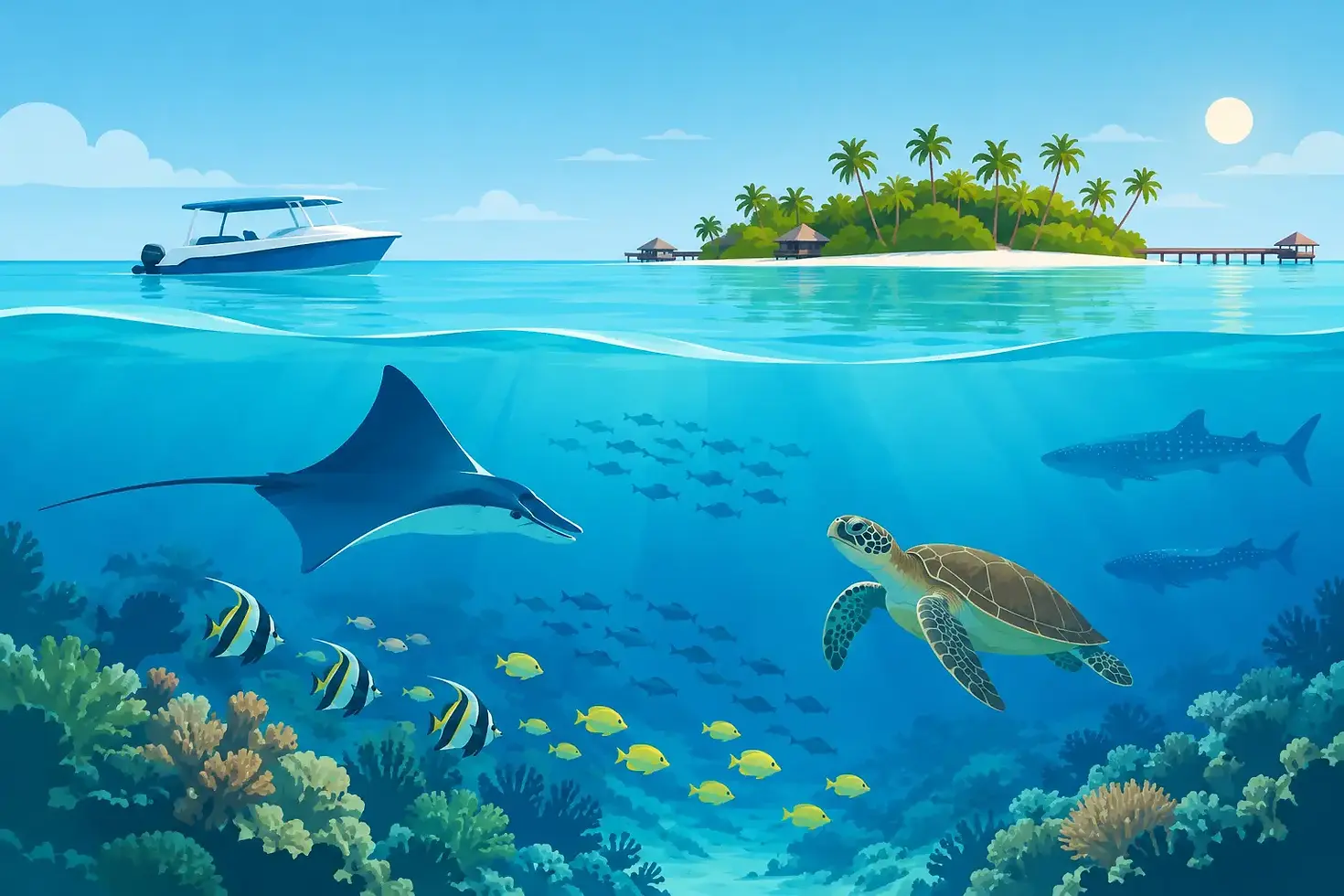
Maldives Marine Seasons Guide for Wildlife Trips
A hammerhead silhouette rising from the blue before breakfast feels very different from watching manta rays circle a cleaning station in plankton-rich water. That is why a Maldives marine seasons guide is more useful than a simple weather forecast. The Maldives offers remarkable underwater experiences all year, but the sea conditions, visibility, and animals you are most likely to encounter can shift with the monsoons.
For travelers staying in Rasdhoo, the good news is that there is no bad season for beach time, snorkeling, or diving. The better question is what kind of day you want to build: calm, sun-filled reef exploration; a high-energy shark dive; or a wildlife excursion where changing conditions can bring more marine life into view.
Maldives Marine Seasons Guide: The Two Main Periods
The Maldives sits near the equator, so temperatures stay warm throughout the year. Expect air temperatures generally in the upper 70s to upper 80s F, warm ocean water, and tropical sunshine in every month. Rather than four distinct seasons, the country has two monsoon-influenced periods.
December through April: Drier skies and clearer water
The northeast monsoon, often called the dry season, usually runs from December through April. This is the period many first-time Maldives visitors choose for long beach days, calm-looking lagoons, and consistently sunny travel plans. Rain can still arrive - this is a tropical destination - but showers are often brief rather than day-long.
For divers and snorkelers, this season can bring excellent visibility, particularly when there is less plankton in the water. Coral gardens, reef walls, schools of fusiliers, turtles, and reef sharks can appear with striking clarity. It is an especially comfortable choice for beginner snorkelers, families, and couples who want to balance water activities with unhurried bikini beach time.
There is a trade-off. Clearer blue water does not always mean the highest concentration of plankton-feeding animals in every location. If your dream is specifically to see mantas feeding, slightly more nutrient-rich conditions can sometimes work in your favor.
May through November: Changing seas and rich marine activity
The southwest monsoon generally runs from May through November. This period brings a greater chance of rain, stronger breezes, and occasional choppier surface conditions. It can also bring incredible marine moments, because currents and plankton can attract life higher up the food chain.
Do not picture nonstop storms. Many days still offer bright sunshine, warm water, and beautiful excursions, with rain passing through quickly. The key is flexibility. A local crew may adjust a departure time, select a more sheltered reef, or recommend a different site based on that day's wind and current.
This season can be a rewarding choice for confident snorkelers and divers who care more about wildlife than perfectly still water. Visibility may be more variable than in the drier months, yet a reef alive with feeding fish, rays, and larger visitors can be more memorable than an empty blue horizon.
What to Expect From Rasdhoo's Signature Marine Life
Rasdhoo Atoll is known for accessible, world-class dive sites, with many reached by speedboat in roughly 5 to 20 minutes. Conditions always matter, but its location makes it a strong home base for travelers who want variety without spending their holiday on long transfers.
Hammerhead sharks: early starts, year-round potential
Hammerhead encounters are one of Rasdhoo's most exciting reasons to dive. These trips usually begin early, often before sunrise, because timing is part of the experience. At deeper outer-atoll sites, divers may have the chance to see scalloped hammerheads cruising through the blue.
Hammerheads can be encountered at different times of year, but they are wild animals, not an appointment. Current, depth, diver experience, and the day's conditions all influence the plan. Certified divers should come prepared for an early wake-up, a potentially challenging profile, and the patience that makes a true wildlife sighting feel earned.
Manta rays: follow the plankton, not a calendar alone
Manta rays move according to food availability, currents, and local conditions. Across the Maldives, seasonal patterns differ between atolls and even between the eastern and western sides of an atoll. That means broad national advice can be helpful, but it should never replace local knowledge.
During periods of higher plankton, manta opportunities can be particularly exciting, though sightings are never guaranteed. If mantas are at the top of your wish list, allow more than one excursion day in your itinerary. A flexible schedule gives your local team the best chance to select the right area when the conditions line up.
Turtles, reef sharks, and rays: dependable reef companions
Turtles, blacktip reef sharks, whitetip reef sharks, eagle rays, moray eels, and colorful reef fish can be seen throughout the year around healthy Maldivian reefs. These are often the animals that make a casual snorkel or a first dive unforgettable.
For snorkelers, calm mornings are frequently the most comfortable time to enter the water. A rash guard, reef-safe sun protection, and a relaxed pace will help you enjoy more time in the sea. Keep your distance, never touch coral or wildlife, and let the animals choose whether to come closer.
Whale sharks: plan the excursion around time, not luck
Whale shark trips are a bucket-list addition for many Maldives vacations. These gentle giants are found year-round in parts of the country, especially around South Ari Atoll, but reaching them from Rasdhoo involves a dedicated excursion rather than a short local hop.
Because weather, travel time, and animal movement all affect the experience, this is best planned with realistic expectations. Set aside a full day, listen to the crew's guidance, and see the journey as part of the adventure. Even when the ocean keeps its biggest surprise out of sight, you may encounter dolphins, flying fish, or beautiful open-water scenery along the way.
Choosing Your Travel Dates by Priority
If you want the easiest mix of sunshine, beach comfort, and typically clear underwater views, January through April is often the strongest fit. It is also a popular travel period, so booking accommodation and transfers early is wise.
If wildlife activity and fewer crowds matter more than having every day look like a postcard, consider May through November. You may need to be more flexible with boat trips, but the changing sea can reward that flexibility with lively underwater conditions.
December is a useful middle ground for many travelers. It can offer festive-season energy, warm weather, and a gradual transition toward drier conditions, though rates and demand may rise around the holidays. November and April are also transition months, so they can offer a mix of conditions rather than a fixed seasonal pattern.
Build a Flexible Marine Itinerary
The smartest Maldives itinerary leaves room for the ocean to lead. Instead of scheduling every marine activity on consecutive days, spread your priorities across your stay. Plan an early hammerhead dive after a rest day, keep a second morning open for snorkeling or diving, and save an afternoon for a sandbank visit, dolphin cruise, or a slower beach day.
At Ras Rana Lodge, guests can arrange transfers and marine experiences with local guidance, making it easier to adapt plans when the weather changes. Comfortable air-conditioned rooms, breakfast, and a short walk to bikini beach also mean a delayed boat departure does not have to feel like lost vacation time.
Bring a light rain layer during the wetter months, but do not let a passing shower discourage you. In the Maldives, the sky can change quickly, and so can the sea. Give yourself a few open days, ask what is happening around the atoll that morning, and let the right conditions turn an ordinary excursion into the story you tell long after you return home.


Comments